Context
Designing the platform to hub all banking knowledge and educate employees to be informed about all banking features to better help the customers
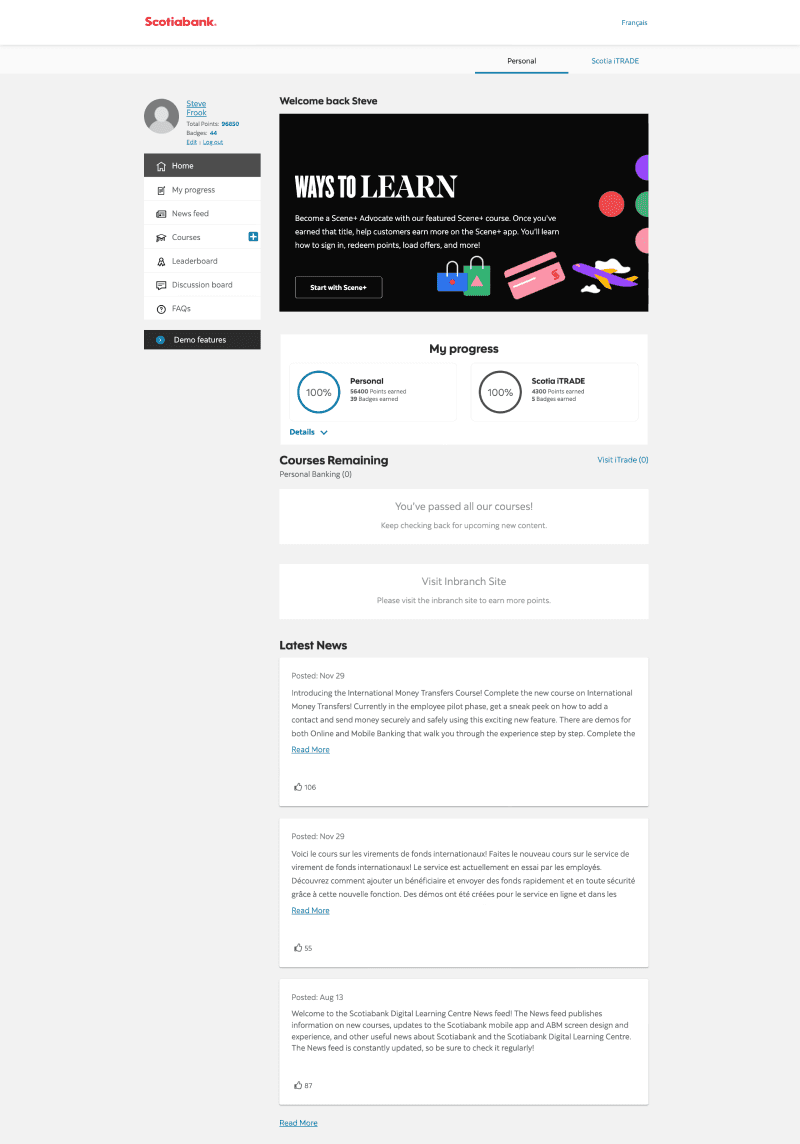
This project aims to help bank employees better serve customers by providing them with the knowledge and tools needed for top-notch digital banking experiences. The Employee Platform offers a range of resources, like interactive demos, to help employees learn about and master the bank's digital services. By ensuring that employees are skilled in assisting customers with their banking needs, we aim to boost customer satisfaction and engagement with digital banking.
Challenge
Employees being unaware of the all the banking features lead to delayed responses during customer calls and low product innovation
The main challenge of the project was to design a platform that would structure the content in a coherent way, especially when dealing with a large volume of information.
Another challenge was to create motivation among employees to self start and continue the learning. Employees may be resistant to engaging with learning materials if they perceive them as dull or irrelevant to their roles. Designing bite-sized, easily digestible learning modules that can be completed in short increments can help overcome this challenge.
We also needed to make sure that the platform was scalable and flexible enough to accommodate the bank's future needs. As the company grows and introduces new products or updates, the platform needs to be scalable to accommodate additional content and users.

Research & Insights
Insights from employees which showed that there are different categories of people with different levels of product knowledge and tech-adoption skills
The team started gathering insights and understand the needs of the bank employees, we conducted interviews and surveys among various banks employees. The research team discovers that employees have varying levels of familiarity with their product offering and digital learning tools.
Some prefer interactive multimedia content, while others prefer text-based resources. Persona workshop reveals distinct user segments, including tech-savvy early adopters and those more resistant to change. 80% of users were in favour of a ‘learn at your own pace’ format of learning.
Ideation
A couple weeks of brainstorming based on the research data lead us to a conclusion on making accountability and engagement, the primary accomplishments required by the platform
After evaluating the data, the strategy was to have a program called Digital navigator with checklist and a reminder system to encourage accountability among employees. It also helps keep track of each individuals technical knowledge on the product to better direct customer calls.
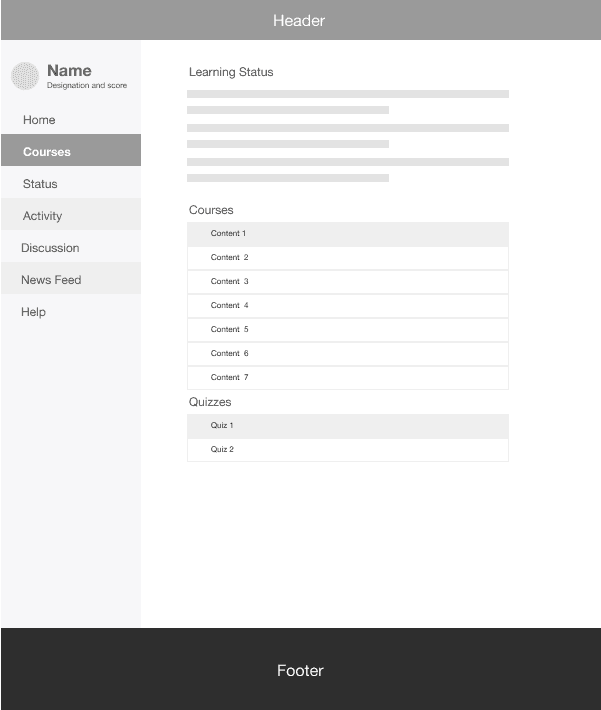
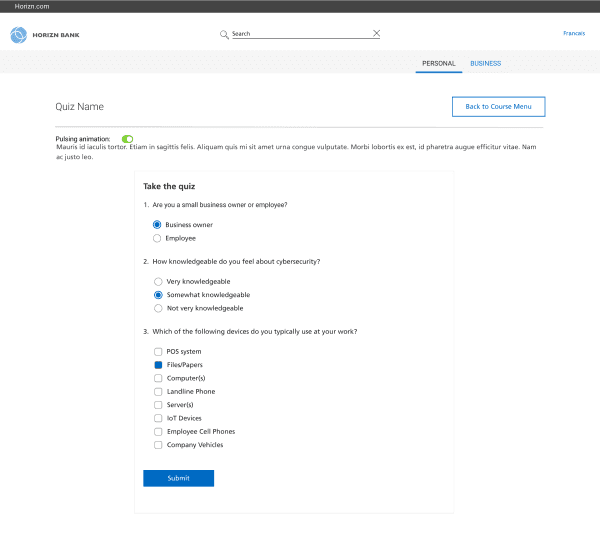
Quizzes were also introduced in order to engage and verify the learning outcomes. In order to keep the learning process lively there are mid-learning testing systems introduced to modules to attain quick review of user learnings experience.
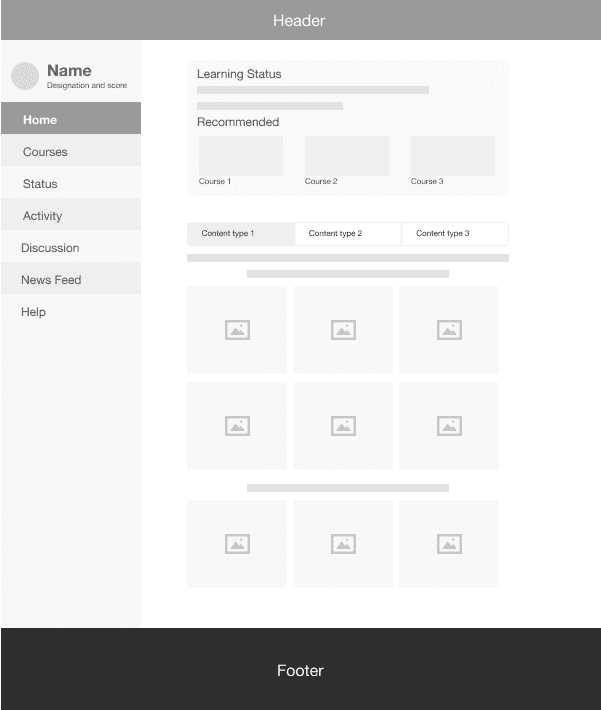
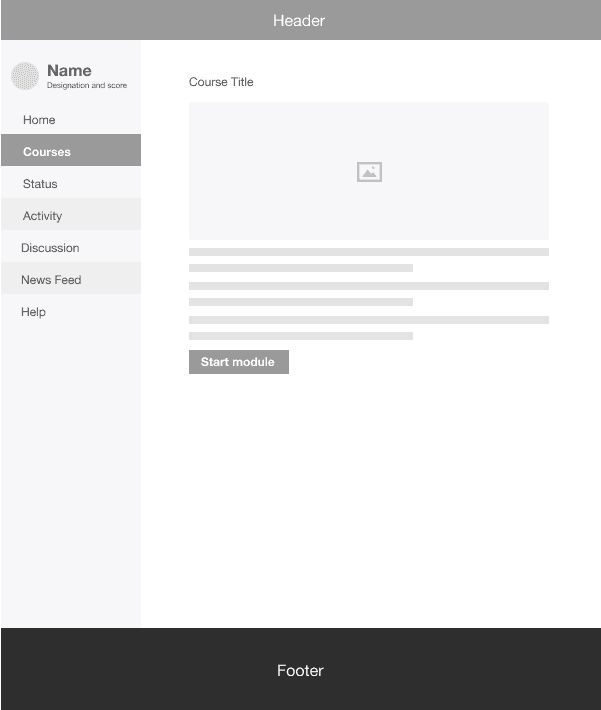
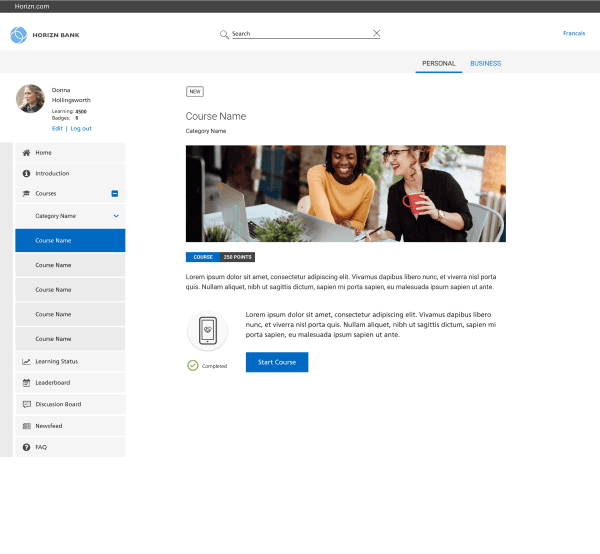
I created wireframes for a few key screens, focusing on the checklist, digital navigator program and quizzes
Initial designs
Minimal dashboard like experience was the go to, based on known employer branding based visual design
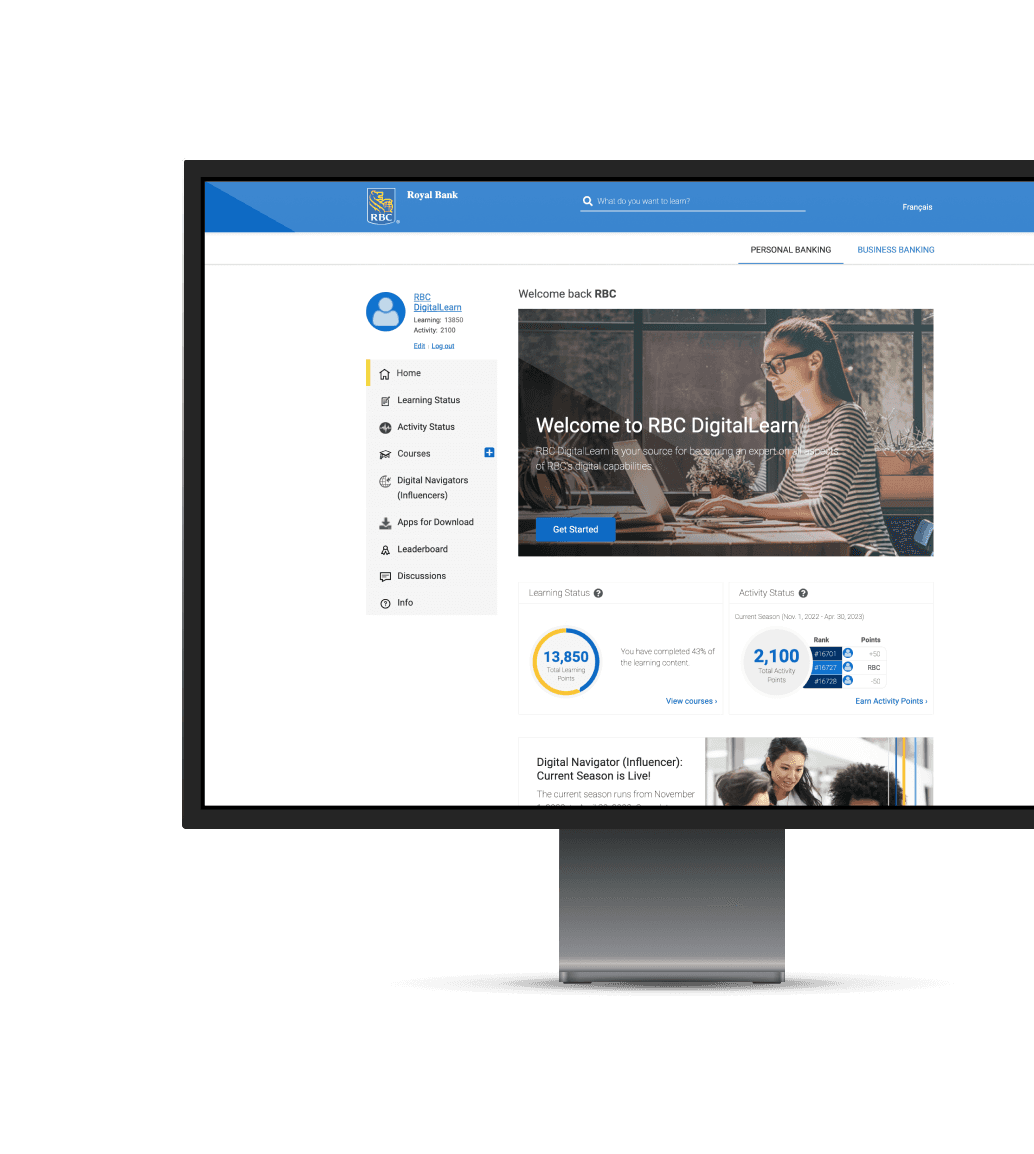
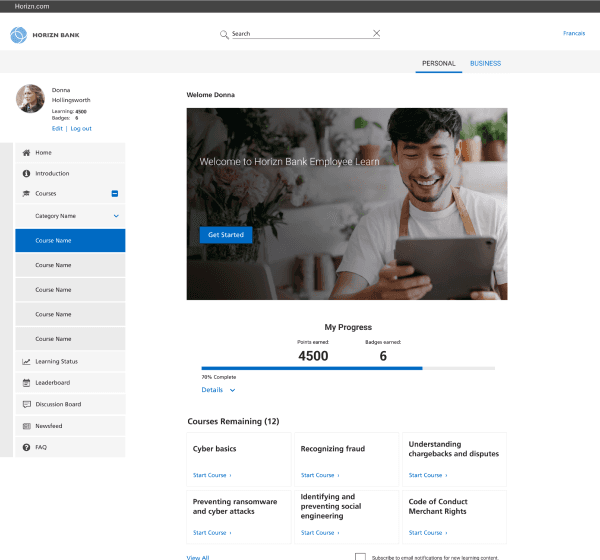
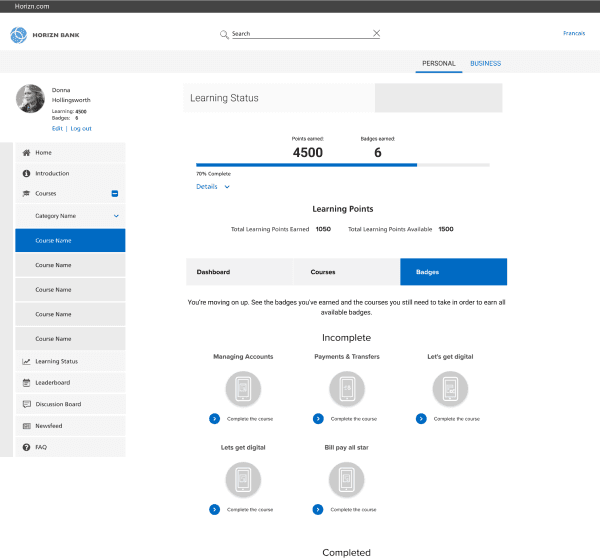
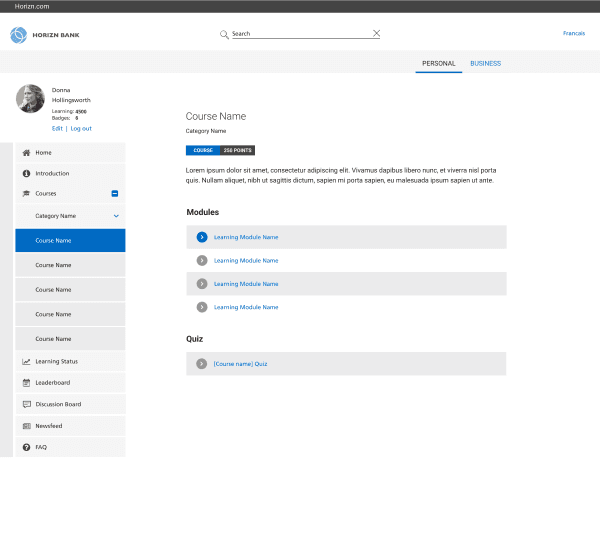
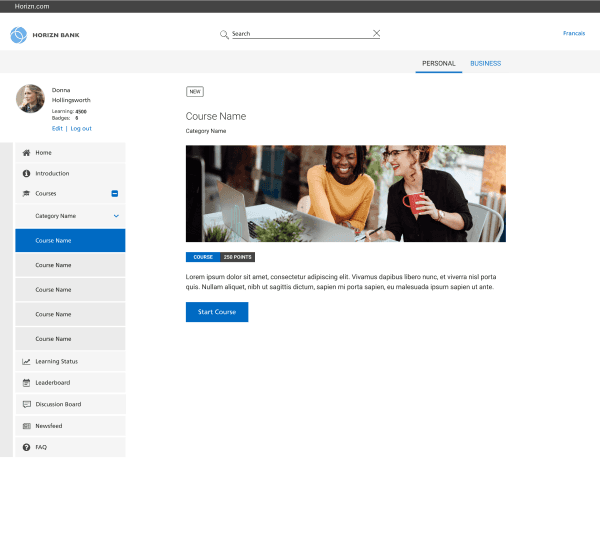
Considering the audience and the tasks they need to perform, we decided to create a dashboard like experience with the layout. The priorities were as below
Instant understanding of the individual score and how to accomplish the required tasks in order to move towards reward.
Leaderboard to encourage action.
Clear navigation in regards to various modes of content and stitched topics for easy learning journey.
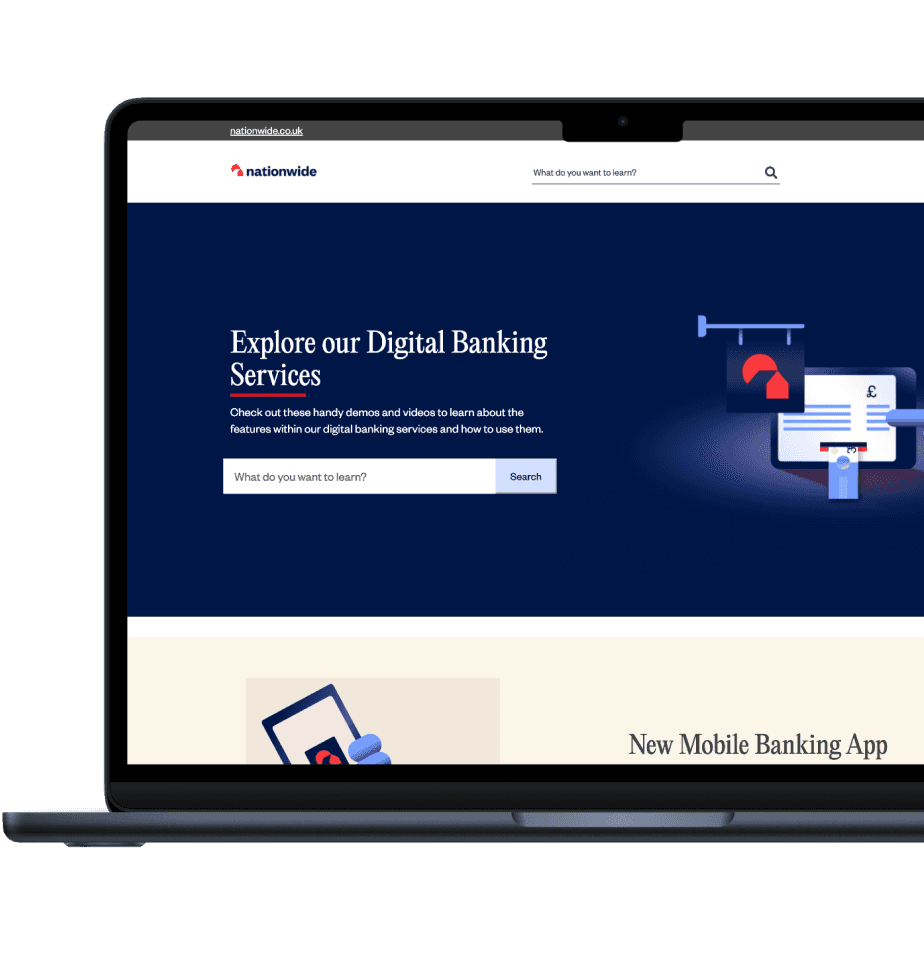
The Visual design was heavily based on the clients brands, so the designs needed to work before applying branding so that it cater for multiple brands, The colours and typography was from the clients branding guidelines to make the experience inclusive of the existing client products, but there was a specific set of icons and UI components designed for this specific learning experience.
Feedback & Iterations
Users were overwhelmed with the learning process and felt isolated in between pathways
Our designs went through 2 major interations after stakeholder feedback rounds and use case results
1. Users were overwhelmed by the amount of content they needed to learn to get accomplishments,
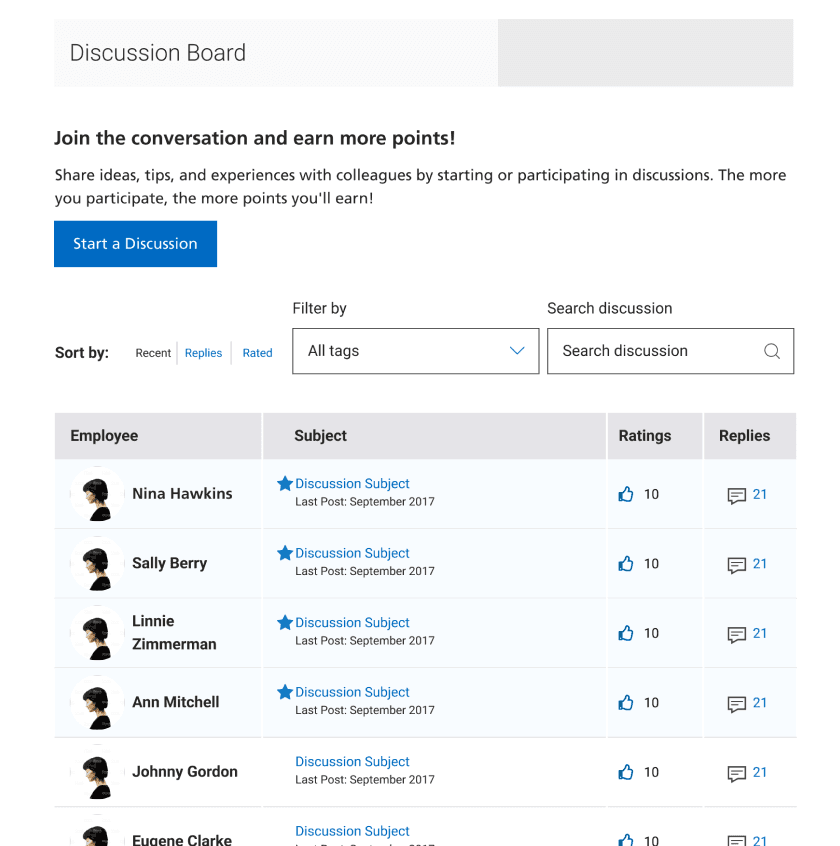
2. Unsure about how to communicate questions or concerns during the learning process and felt uninvolved in content improvements.
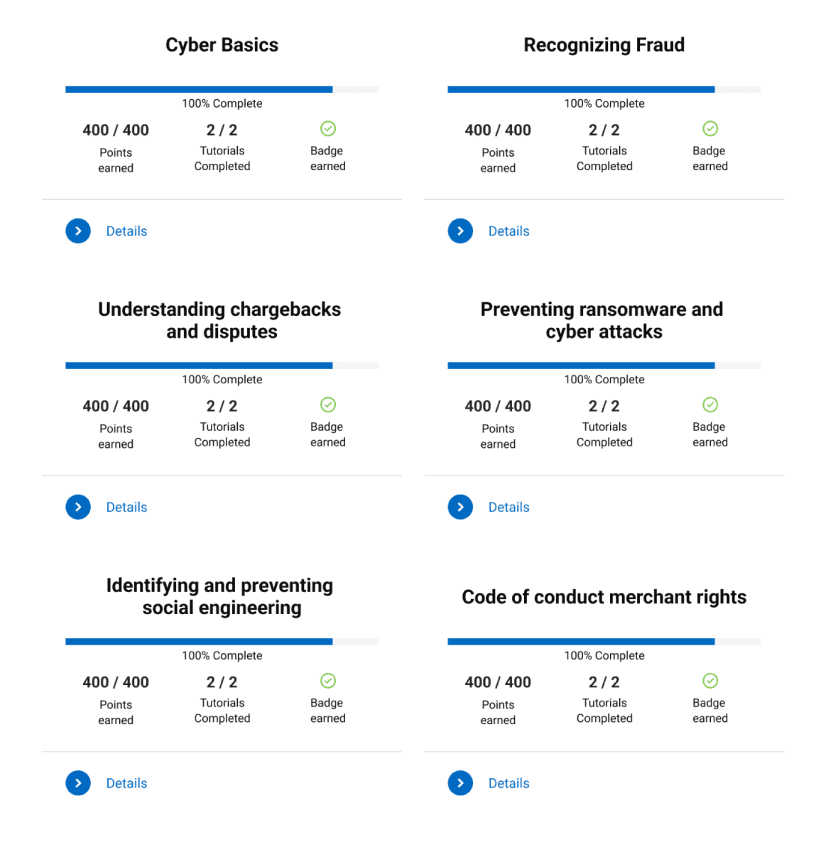
So, we came up with a structured content which is categorised into sections which would align with the learning paths of each employee, and a solution to add a discussion board so that employees can ask questions and start discussion on topics which would affect/improve the productivity
Final designs
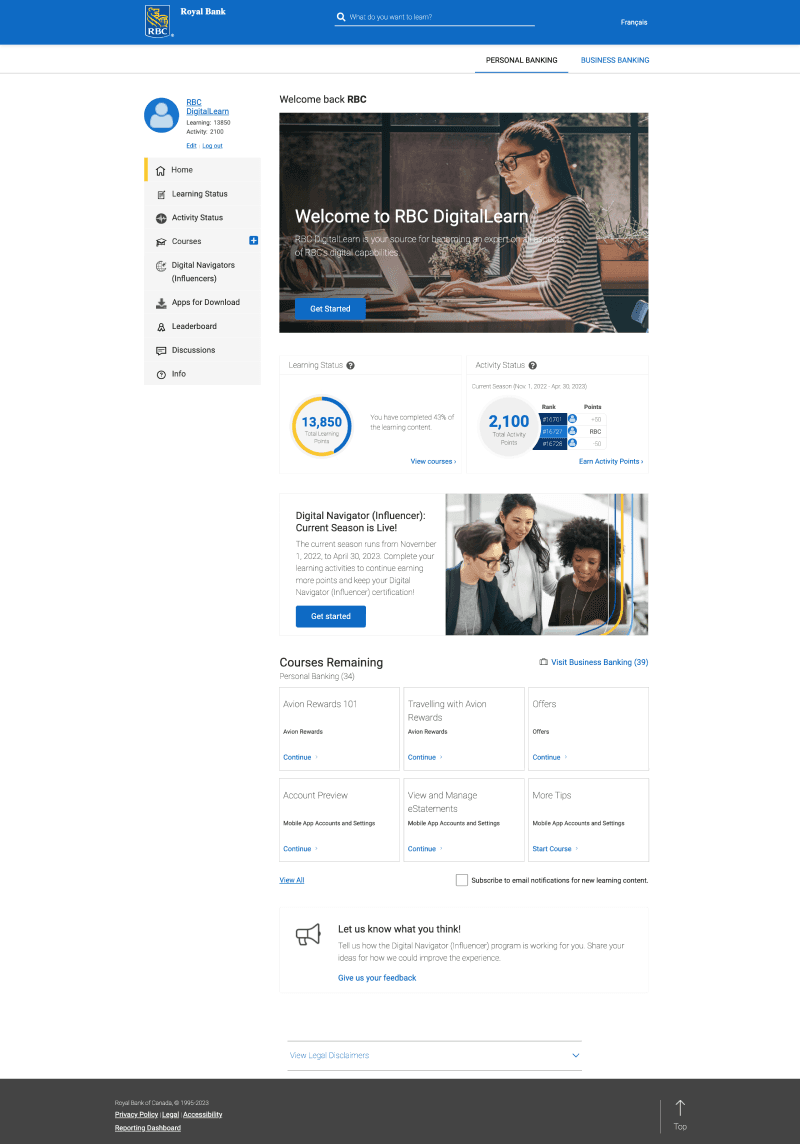
A E-learning platform with healthy ranking and rewards system to encourage employees self started product education.
To be able to induce loads of content and to not make the user overwhelmed by it, I broke the content into course categories and separated it into business and personal banking.
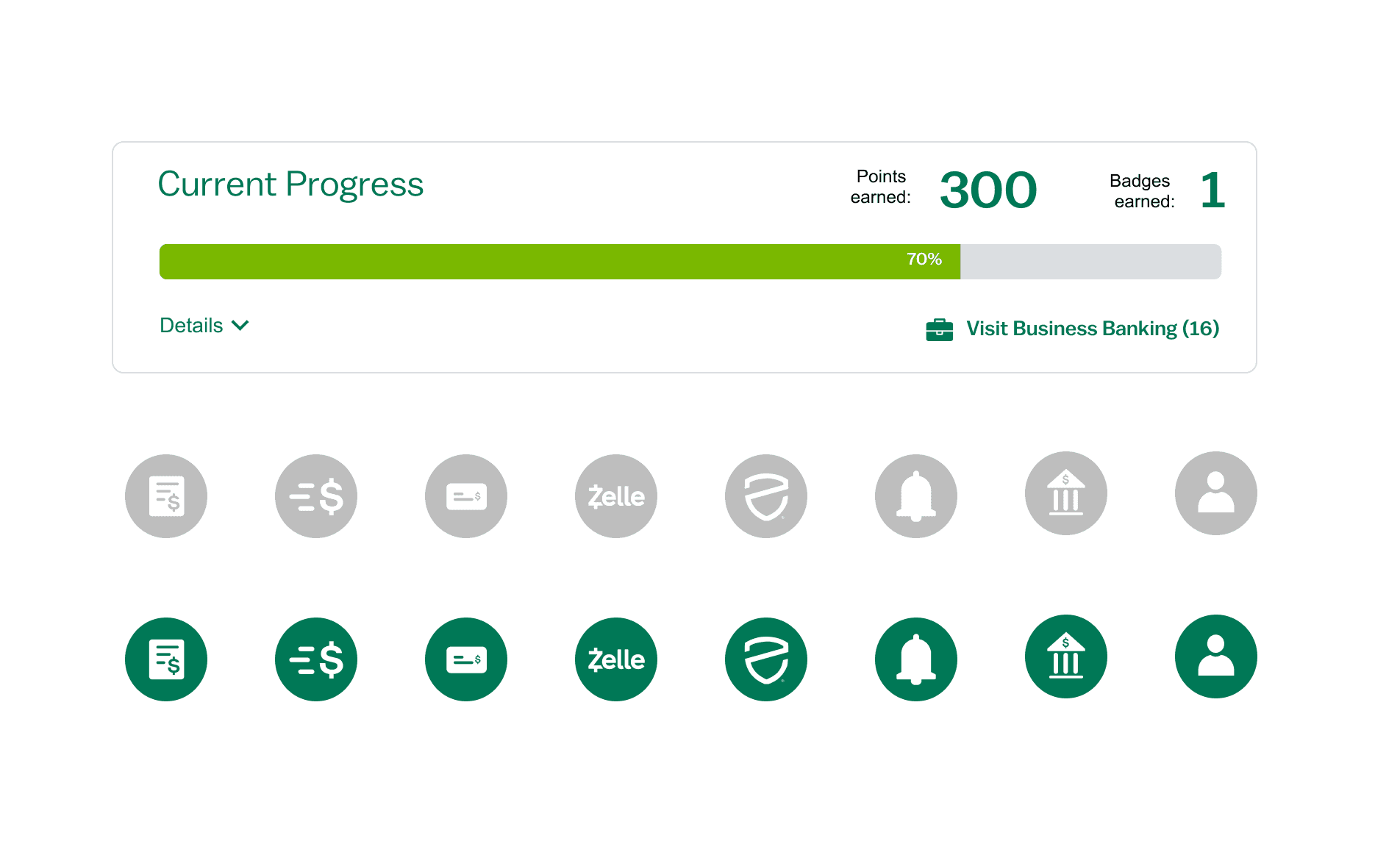
The outcome is a modular layout, simplifying the integration of new content as demand emerges. To achieve our goal of facilitate engaging learning, we incorporated badges as rewards for completion of each courses. Quizzes after lessons were also crafted to make it feel less like a test and more like a second revision of learned content.
From a employer perspective, layout offer a strategic advantage. They enable the managers to properly direct employees towards the right technical positions based on their rankings and knowledge. These rankings also helped employees get motivated to learn more about the product to better perform and stay engaged in the evolution of the company.
Results
Achieving impactful results with high user engagement and reduced agent efforts.
+100% Employee Improvement on product and company knowledge
+75% New Feature adaptation among employees
+85% Digitally active employee base
Learnings
Lessons and Improvements
Collaborating closely with multiple teams from multiple financial institutions has been incredibly rewarding, especially the learnings of building a complex knowledge product which affects the efficiency of work flow in larger organizations, as we customize the sites differently for each client with their content post-launch, it fascinating how many ways a solution could be framed and still cater. Right now, I'm having a blast delving into key components and enhancing the UX as we go along. These insights have already impacted my approach for my next projects.